She Was Andy, So I Could Be Bonnie
One of my favorite solo date activities on a rainy Wednesday—or honestly any day I'm bored—is going to the movies. Yes, I'm one of those people still helping keep movie theaters in business. And in a world that's constantly evolving, I hope we never lose the art of cinema or that feeling of sitting in a dark theater, escaping into someone else's story for two hours.
Today was one of those rainy days.
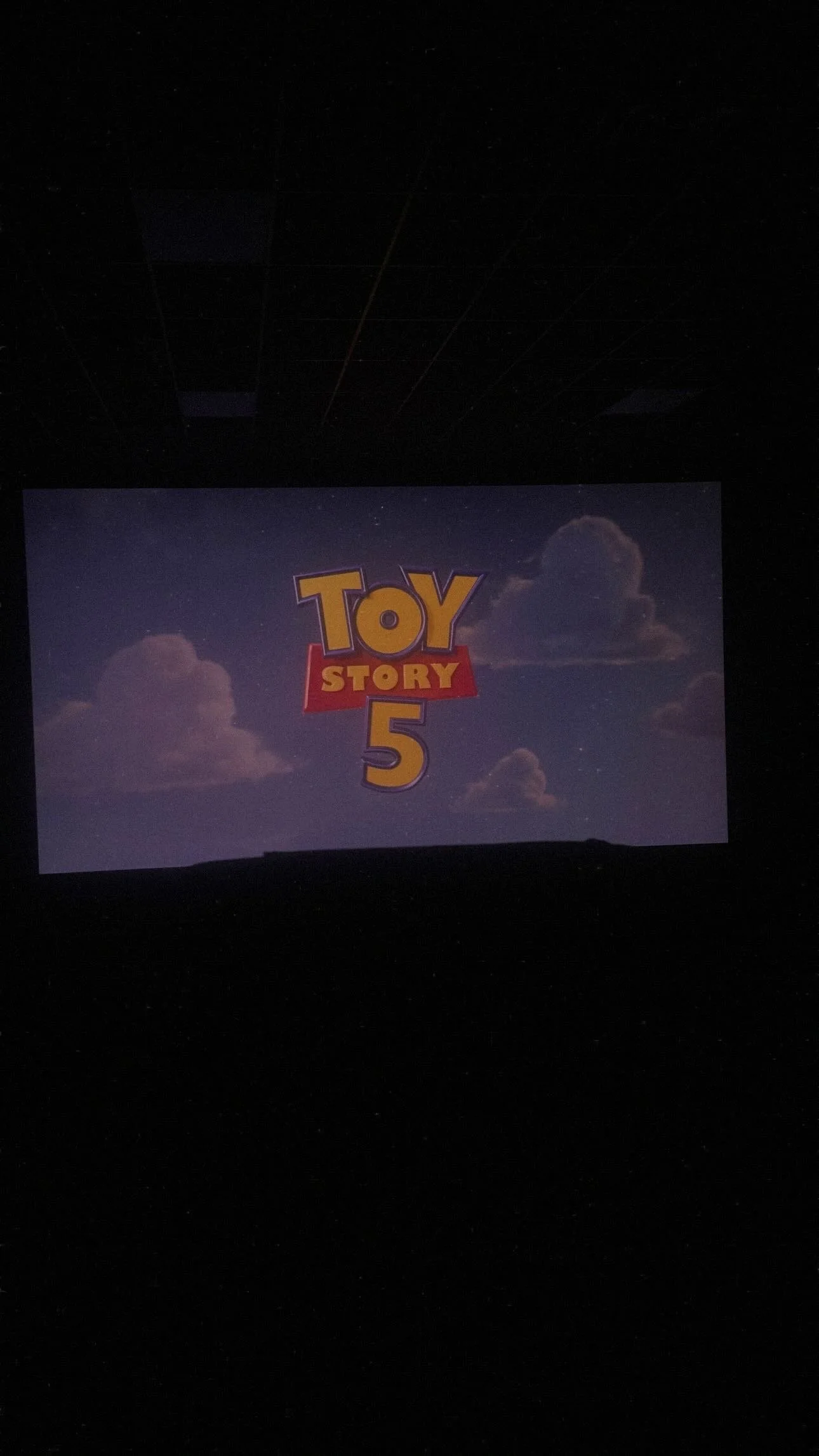
I've been seeing all kinds of opinions on social media about Toy Story 5, and I wanted to form my own. Because when it comes to movies, the only opinion I truly trust is mine.
I love cinematography. I've seen movies from just about every genre imaginable. I like to compare myself to an everything bagel—I enjoy almost every kind of film, music, cuisine, and style. Maybe it's because I'm a Gemini. Or maybe I'm just Avery.
I believe movies hold messages that many people overlook. Some films entertain you. Others quietly remind you of parts of yourself you forgot existed.
This one did exactly that.
My cool, inspiring older sister, Chelsea, introduced me to the first two Toy Story movies when I was little. I still remember sitting beside her in the theater watching Toy Story 3. She cried because she was saying goodbye to Andy—to the little boy she had grown up alongside.
Years later, it became my turn.
She was Andy, so I could be Bonnie.
I wasn't just crying once. Or twice. Probably closer to five times.
Because I saw so many versions of Avery in Bonnie.
Seven-year-old Avery.
Nine-year-old Avery.
Twelve-year-old Avery.
Sixteen-year-old Avery.
Eighteen-year-old Avery.
Twenty-three-year-old Avery.
Bonnie is imaginative, creative, free-spirited, and unapologetically herself. She creates worlds from nothing and finds joy in places adults often overlook. But then she encounters girls who make fun of her for still playing with toys, and slowly she begins questioning the parts of herself that once came so naturally.
I won't spoil the movie, but that storyline brought me right back to my own childhood.
My lifelong best friend, Sienna, and I had imaginations that never seemed to run out.
Our favorite books were The Boxcar Children, so naturally we decided we were homeless children living off the land. During one spring cleaning, we spent an afternoon going from driveway to driveway collecting discarded materials to build our own "house." It was halfway successful... until one of the neighbors knocked on my parents' door to complain that we were taking things from the curb and pretending they were treasure.
Sorry... not everyone has a cool imagination.
We held wedding ceremonies for frogs we caught at the neighborhood pond. We also held funerals when things didn't exactly go according to plan. We rode our bikes pretending they were Cadillacs, had dance parties in Sienna's family room until we were sweating, and stayed up until four in the morning yelling, "No screen peeking!" while playing Black Ops.
We played outside until the streetlights came on.
Sometimes even after.
Looking back, those memories weren't extraordinary because of what we were doing.
They were extraordinary because we believed completely in the worlds we were creating.
That's what this movie reminded me of.
In a world filled with negativity and endless scrolling, Sienna and I were lucky enough to grow up in a time where technology complemented our childhood instead of replacing it.
We played outside.
We made friends.
We built imaginary worlds.
Then we'd come inside and play video games or make silly videos.
There was balance.
Technology became another outlet for creativity—not our entire identity.
I think that's the biggest lesson this movie quietly teaches.
Technology isn't the enemy.
But screens should never replace imagination, friendship, creativity, or play.
Watching Sienna today makes me just as happy as those childhood memories do. She's becoming the businesswoman she's always dreamed of being while continuing to chase her modeling goals.
And every time I see her succeed...
I still see seven-year-old Sienna.
The same little girl catching frogs, dancing in her living room, and believing anything was possible.
Growing up is bittersweet.
You'll outgrow toys.
You'll lose friendships.
You'll make new ones.
You'll encounter people who try to convince you that the things bringing you joy are childish.
But you also get to decide whether you leave your imagination behind or bring it with you.
Maybe that's why Toy Story 5 affected me so deeply.
It wasn't really about toys.
It was about protecting the version of ourselves that believed anything was possible.
The little girl who built forts from other people's trash, thought bicycles were Cadillacs, and never questioned whether imagination had an expiration date.
If you haven't seen Toy Story 5 yet, go.
Take yourself on a date.
Invite a friend.
Take your kids.
But most importantly...
Go visit the seven-year-old version of yourself.
I have a feeling they've been waiting for you.
